The Critical Issues
A framework for examining the proposal
The development application is a model of a future operation.
It describes something that does not yet exist and asks Council, State agencies and the community to rely on that description when deciding whether the development should proceed.
Five questions provide a useful starting point:
What parts of the real operation are not represented?
Which conclusions depend on assumptions rather than demonstrated evidence?
What happens where the different parts of the operation interact?
Would the approval legally and practically confine the development to the version that was assessed?
Are all the inputs, all the outputs and their partitioning fully described, including atmospheric emissions, incinerator ash, water, rejected materials and products.
These questions do not assume that the proposal must be approved or refused.
They test whether the evidence is sufficient for the decision being requested.
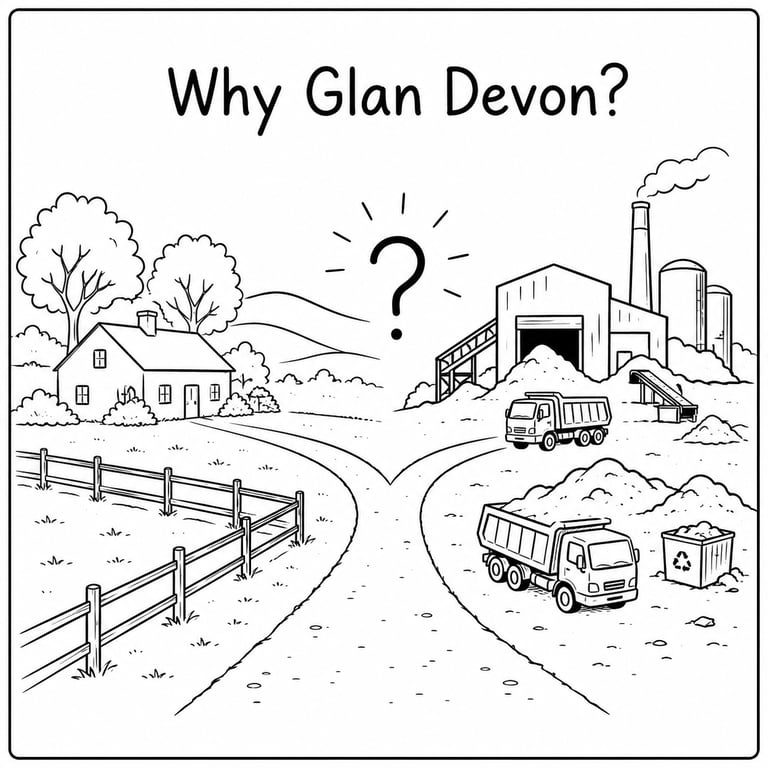
Is this the right use in the right place?
The proposed site is rural land.
The development involves imported waste streams, heavy vehicles, industrial processing, thermal treatment, emissions control, waste and product storage, residue management and continuing regulatory oversight.
The applicant therefore needs to demonstrate more than the potential usefulness of the finished fertiliser.
It needs to show why the complete operation belongs at Glan Devon rather than on land already intended and serviced for intensive industrial activity.
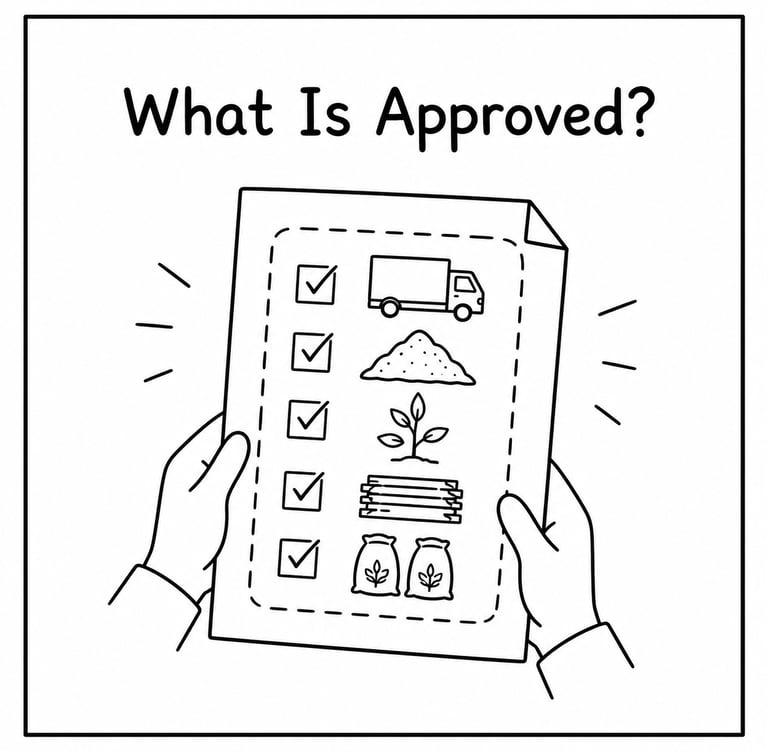
What exactly would be approved?
Promises and reassurances do not define an operation. An approval needs clear boundaries around:
what materials may enter;
what materials are prohibited;
how much may be received and stored;
the scale and hours of operation;
the thermal process and pollution controls;
monitoring and testing requirements;
startup, shutdown and abnormal operation;
rejected loads and failed product;
and what must happen when the operation moves outside its permitted limits.
Without those boundaries, the eventual operator may be left to interpret broad commitments after the facility is built.
The development being operated should be the same development that was assessed.
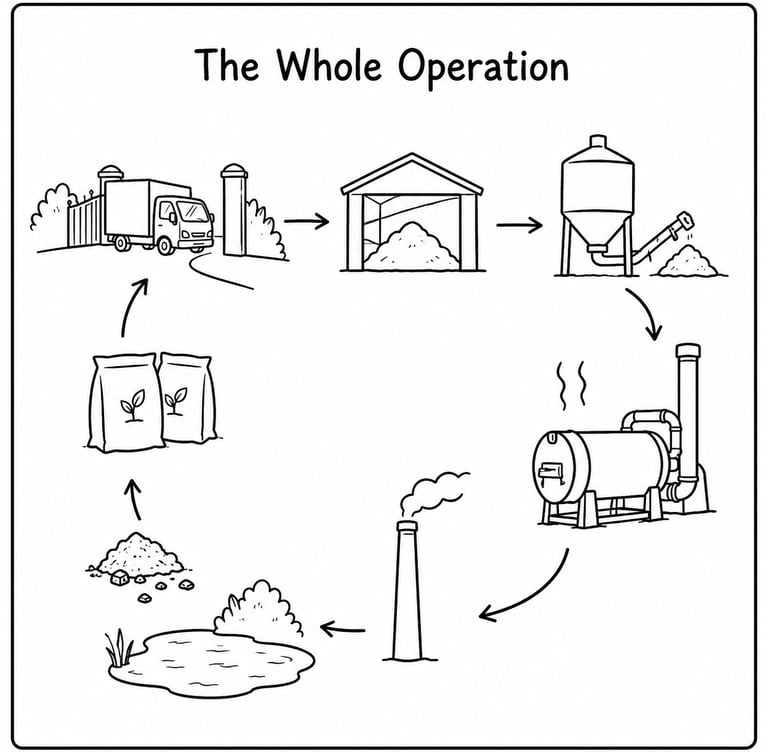
Has the whole operation been assessed?
The facility will not operate as a set of separate consultant reports.
Biosolids, waste fuel, transport, storage, crushing, drying, combustion, air controls, water systems, residues, product testing, markets and compliance will all interact.
A solution in one area can create a constraint or cost somewhere else. Feedstock restrictions may improve emissions but reduce available fuel. Additional controls may increase maintenance and operating costs. Slow product dispatch may create storage pressure. A blocked preparation stage may cause material to accumulate even while trucks continue to arrive.
The important question is not whether each component can work independently.
It is whether all the components can operate together, under real conditions, inside the same practical and enforceable operating envelope.
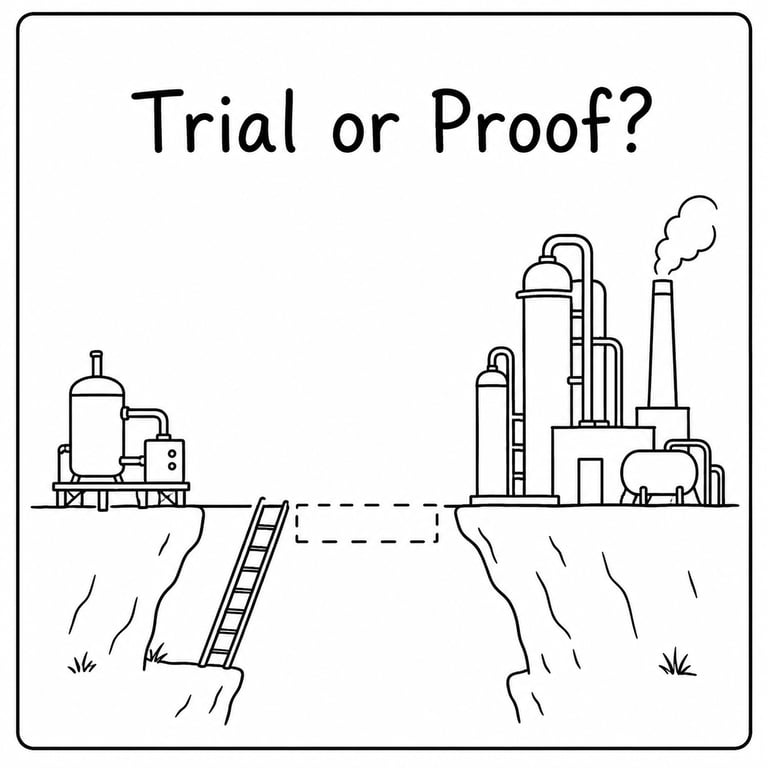
Is a trial being treated as proof?
A trial exists because something remains uncertain.
It may be the technology, the feedstock, the operating scale, the control system, the emissions performance, the product pathway, the commercial model—or the way all those elements work together.
That does not make innovation unacceptable.
It does mean the approval should reflect the maturity of the proposal.
A genuine trial should be tightly bounded, independently monitored and transparently reported. It should not create an assumed pathway to larger commercial operation before the trial has produced the evidence it was meant to obtain.
The question is not merely whether the equipment can operate.
It is who carries the risk while the complete system is being proven.
Does the modelling represent real operation?
Industrial processes do not operate at a single average value.
Feed composition changes. Moisture changes. Equipment ages. Filters load. Instruments drift. Plants start, stop, slow down and experience disturbances.
Two operations may have the same average emissions but very different numbers of high-emission periods.
That matters when compliance depends on staying below a limit.
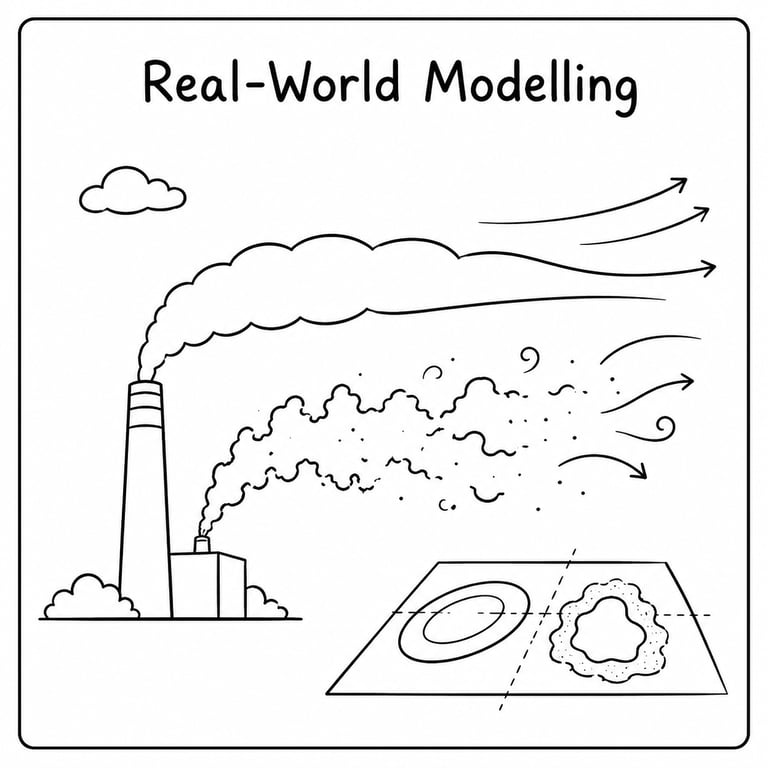
The Glan Devon air assessment appears to use selected constant emission rates while the weather changes through the model. That may describe the consequences of those chosen source values, but it does not by itself establish the real distribution of emissions from a variable waste-burning operation.
The average can be right while the number of breaches is wrong.
When does waste become a product?
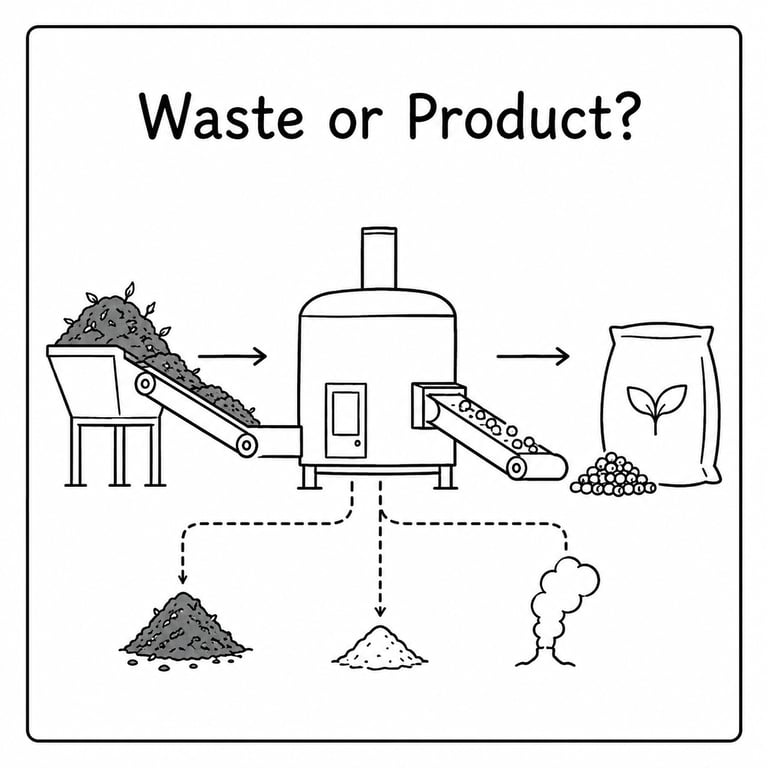
Drying a material changes its moisture.
Pelletising changes its form.
Blending it with mineral fertiliser changes its composition and may reduce contaminant concentrations per kilogram.
None of those steps automatically proves that contaminants have disappeared or that the material has ceased to be regulated waste.
That transition depends on evidence, testing and compliance with the relevant regulatory requirements.
The important questions are:
What remains in the material?
Where do contaminants go during processing?
What standards must the final product meet?
How is compliance demonstrated?
What happens when a batch fails?
What happens to ash, residues, condensate and rejected material?
A new name is not a mass balance.
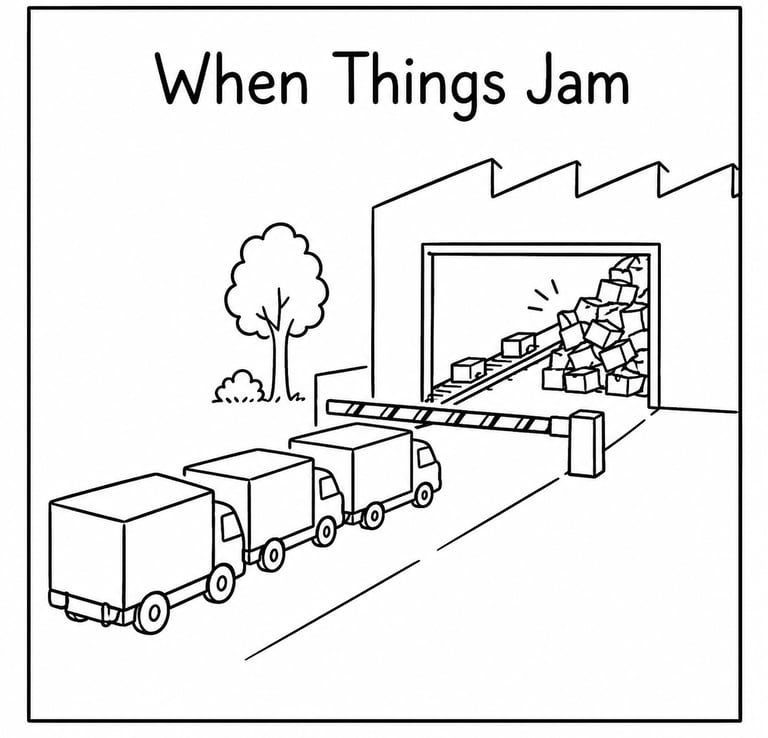
What happens when the process does not run smoothly?
Annual tonnage figures can make an operation look like a steady flow.
Real plants have bottlenecks.
Material may arrive too wet, too coarse, too contaminated or outside specification. Crushers block. Screens clog. Dryers slow. Storage fills. Testing takes time. Products may not leave the site as quickly as expected.
If the business receives income when waste enters the gate, commercial pressure may favour continued acceptance even when downstream processing or storage is constrained.
That is why storage limits, residence times, rejection procedures, shutdown rules and authority to close the gate matter before approval—not after complaints begin.
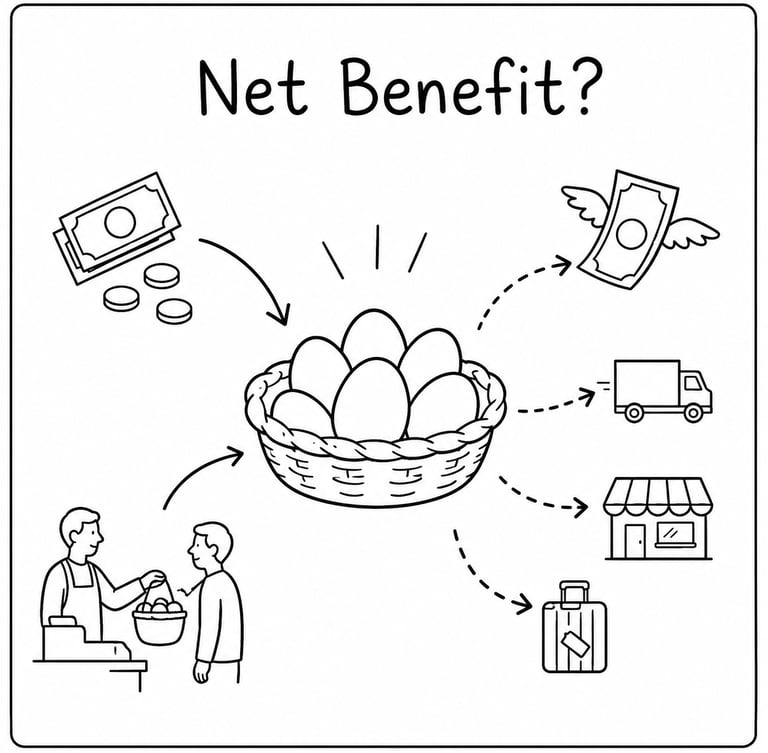
Do the economic claims show a net local benefit?
Economic activity is not the same as economic benefit.
A project can generate expenditure, wages, invoices and truck movements without making the district richer by the full amount shown in an economic-output model.
Some money may leave the region. Some workers may move from existing businesses. Some activity may displace other activity. Some costs may fall on neighbours, roads, Council and regulators outside the economic model.
The relevant questions include:
What new value stays in the South Burnett?
How many jobs are genuinely local, permanent and additional?
What costs and risks are excluded?
What existing activities may be displaced?
Is the district better off after all of those effects are considered?
A large flow of money is not necessarily a large net gain.
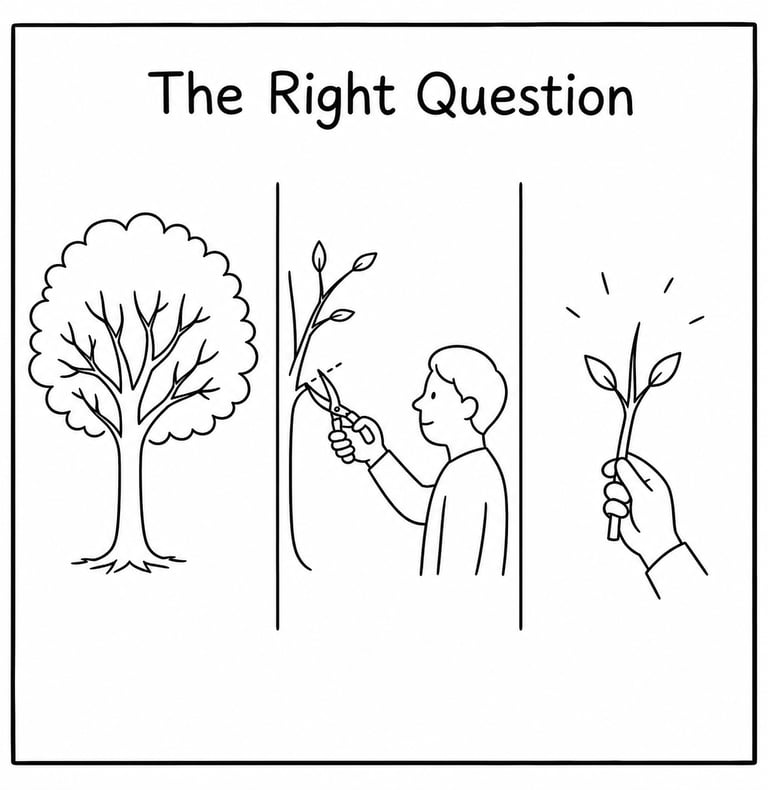
Are the arguments answering the right question?
A fact can be true and still be irrelevant to the decision.
Another waste activity may already exist nearby.
A road may already carry trucks.
A larger industrial facility may operate somewhere else.
Landfill capacity may genuinely be a problem.
None of those facts, by themselves, answers whether this particular development is suitable at Glan Devon.
The test is simple:
What is the actual decision question?
What question do the presented facts answer?
Are they the same question?
Good evidence answering the wrong question can still produce a poor decision.
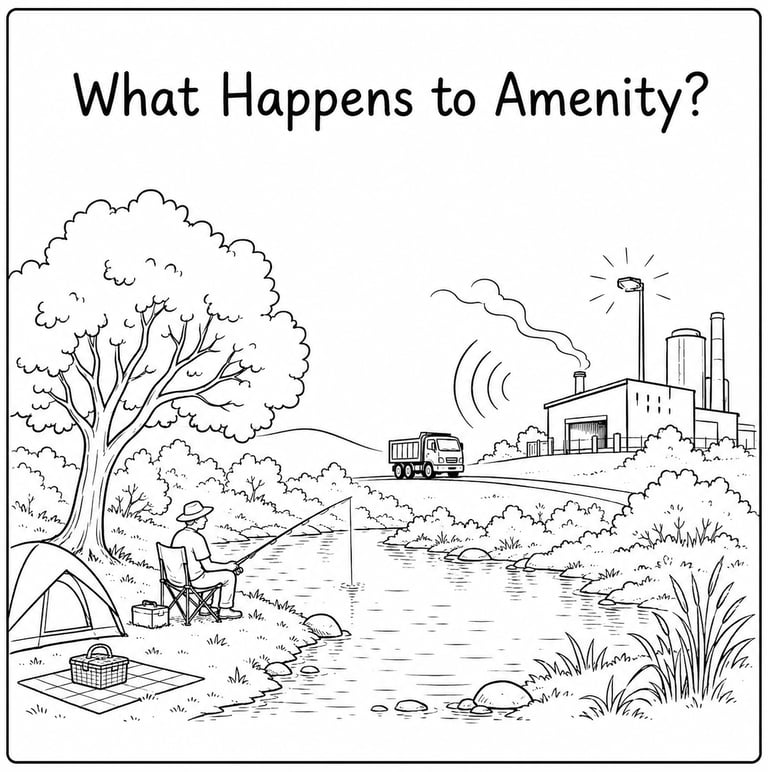
Has rural amenity been properly assessed?
Amenity means the qualities of a place that affect how people use and enjoy it.
It includes appearance, quietness, smell, dust, lighting, traffic, safety and the general character of the area.
A development may meet individual environmental limits and still change what it is like to live in, visit or use a place.
The Glan Devon site is within a rural landscape near existing recreation and visitor uses. Barkers Creek at Mondure Crossing is used for fishing, swimming, kayaking, birdwatching and photography. Deep Dime offers farm-stay and RV accommodation farther along the same road.
Visitors must pass the proposed facility to reach those places.
The assessment therefore needs to consider more than effects measured at the nearest house. It should examine industrial buildings, stacks, cooling towers and acoustic barriers; trucks and vehicle movements; continuous or low-frequency noise; odour and dust; lighting and visible plumes; and the combined effect on the rural setting.
The important questions are:
What existing qualities and uses of the area matter?
Where and when do people experience them?
What parts of the development may affect them?
Have those effects been assessed under realistic conditions?
Can enforceable conditions preserve the amenity of the area?
Amenity is not another way of saying, “I don’t want it here.”
A useful amenity concern identifies a real place, an existing use and a specific way the proposed development may change how that place is experienced.
© 2026. All rights reserved.